
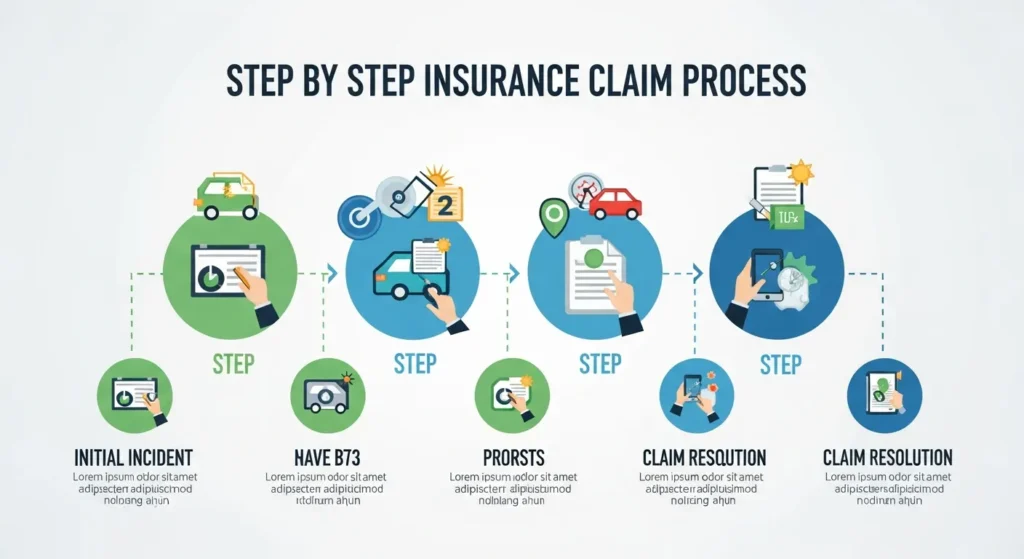
Insurance Claim
Having an accident, suffering a loss or experiencing damage is challenging enough — plowing through insurance-speak on top of that can be overwhelming. Well, the fact is that filing an insurance claim isn’t so complicated after all when you know what to do and how to go about doing it.
This step-by-step guide demystifies the process so that you can get paid—without the BS (bad stuff), jargon, and runaround. Insurance Claim
Step 1: Prioritize Safety First Thing’s First!
Forget insurance first; you never want this kind of trouble to begin with.
Please, make sure you (and everyone) are ok.”Insurance Claim
If you can safely, move out of the way
If anyone is hurt, dial emergency services
When you finally have the situation under control, then you can start to handle all of the paperwork side.Insurance Claim

step 2:Know What Your Policy Covers
Spend a few minutes reviewing your policy before filing a claim. Check:
What kind of events are accepted
Your deductible amountInsurance Claim
Any exclusions or limits
This helps you stay away from surprises later and informs you what to expect from your claim.
Step 3: Collect All The Key Information
A well-documented claim is a faster, easier claim. Try to collect:
Date, time and scene of the occurence
Photos/videos of damage or loss
Contacts: Names and contact information for everyone that was connected.Insurance Claim
Witness information, if available
Police report (if required)
The better your information, the fewer delays you can prevent from occurring.
Step 4: Call your insurance companyIf you do agree to a settlement, contact your insurance company to let them know the terms.
Get in touch with your insurance company as soon as you can. Most businesses let you register a claim:Insurance Claim
On the web
By using a mobile app
By phone
Be open and honest when you tell someone about what occurred. Stick to the facts and don’t conjecture.
Step 5: Send in the necessary papers
Your insurance company may ask for proof, such as:
Pictures of the devastation
Estimates or bills for repairs
Medical records (for health or injury claims)
Proof of ownership or purchase
To keep things going, send in everything as soon as you can.
Step 6: Review and inspect the claim
The insurance company will look over your claim when you send it in. This might include:
A call from a claims adjuster
Check out the car or property
Checking documents
This phase helps the insurance company figure out how much they will pay.
Step 7: Approving the claim and settling it
After the evaluation is done, your insurance company will:
Accept the claim in whole or in part
Ask for more information
Or refute the assertion and explain why.
If you get the go-ahead, you’ll get one of the following:
A service that fixes things
Or a payment, depending on your policy
Always carefully read the specifics of the settlement.
Step 8: End the claim and keep records.
The claim is closed after the repairs are finished or the payment is paid. Save:
Claim number
Emails and papers
Receipts for payments
In the future, these recordings could come in handy.
Click Here : U.S. Government – Consumer Insurance Help
Tips to Help You Avoid Delays in Your Claim
Quickly report the claim
Be truthful and correct
Take pictures that are clear
Quickly respond to inquiries from your insurance company
If you don’t understand anything, ask questions.
for Health Insurance : five things for your health insurance
Step 9:Be aware of the deadline for filing a claim
All insurance policies have a deadline for making a claim. Some need to be told within 24 to 72 hours, while others give you a few days or weeks. Always verify your insurance timeframe since missing the deadline might mean your claim is denied.
Step 10:Don’t fix or throw away things too soon
Don’t fix your car, house, or other damaged property until the insurance company has finished its examination or given its OK. Fixing things too soon might cause problems or lower the amount of money you get.